
How to Become a Digital Marketing Specialist in 2026
Becoming a digital marketing specialist in 2026 requires a very different skill set than it did five years ago. AI-powered tools have changed how marketers create content, analyze data, and reach audiences. Search engines now use machine learning models to rank content. Social media algorithms reward depth and engagement over volume. This guide gives you a realistic picture of what the role looks like today, what you need to learn, and how to build the experience that gets you hired.
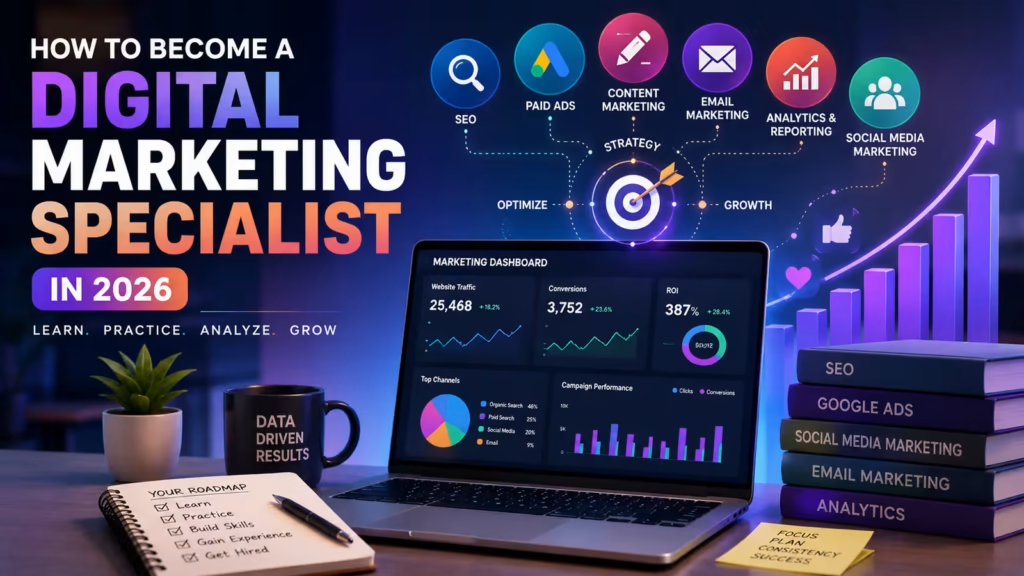
What Does a Digital Marketing Specialist Do?
A digital marketing specialist is responsible for driving targeted traffic, generating leads, and growing brand awareness through online channels. The role spans multiple disciplines depending on the company’s size and structure. In a small company, one specialist might handle everything from SEO to paid advertising to email campaigns. In larger organizations, specialists focus on one or two specific channels.
Core responsibilities typically include planning and executing campaigns across search, social, and email channels, analyzing performance data, optimizing campaigns based on what the data shows, and producing or coordinating content. The ability to connect marketing activities to measurable business outcomes — revenue, leads, conversions — is what separates effective specialists from those who simply execute tasks without understanding their impact.
Search Engine Optimization in 2026
SEO remains one of the highest-value skills a digital marketing specialist can develop. Organic search traffic is free, compounds over time, and delivers some of the best conversion rates of any marketing channel. But the nature of SEO has shifted significantly.
In 2026, Google’s AI-powered search results — including AI Overviews — now appear above traditional organic listings for many queries. This means content must answer questions directly, clearly, and comprehensively. Thin content optimized purely for keyword density no longer ranks. What ranks is content with genuine depth, clear structure, and direct answers to specific user questions.
The technical side of SEO has also grown in importance. Page experience signals — Core Web Vitals including Largest Contentful Paint, Cumulative Layout Shift, and Interaction to Next Paint — directly affect rankings. Digital marketing specialists need to understand how to read a site audit report, identify crawling issues, fix broken internal links, and optimize page loading performance even if they do not personally implement the fixes.
Paid Advertising: Google Ads and Meta Ads
Paid advertising delivers immediate traffic and measurable results, making it one of the most valuable skills for a digital marketing specialist. Google Ads and Meta Ads — Facebook and Instagram — are the two platforms that generate the most advertising spend globally and appear most frequently in job requirements.
For Google Ads, you need to understand search campaign structure, keyword match types, Quality Score, bidding strategies, ad extensions, and conversion tracking. For Meta Ads, you need to understand audience targeting using interests, demographics, lookalike audiences, and retargeting, along with campaign objective selection and the Meta pixel for tracking conversions on your website.
The most important skill in paid advertising is not setting up campaigns — it is interpreting performance data and making intelligent optimization decisions. Which ad group has the worst cost per conversion? Which audience segment produces the best return on ad spend? These are the questions that determine whether a campaign is profitable or wasteful.
Content Marketing and Copywriting Skills
Every digital marketing channel requires content. Whether it is blog posts for SEO, ad copy for Google Ads, captions for social media, or email subject lines for campaigns, writing clearly and persuasively is a fundamental marketing skill that AI tools cannot fully replace in 2026.
Content marketing goes beyond writing. It includes understanding audience intent — what questions your target customers are asking at each stage of their buying journey — and creating content that answers those questions at the right time. A blog post targeting someone who does not know your product exists should look completely different from a case study aimed at someone ready to buy.
AI writing tools have become standard in marketing workflows. Learn to use them effectively as assistants for research, drafting, and ideation — while developing the editorial judgment to recognize when AI output needs significant improvement. Employers in 2026 expect digital marketing specialists to be AI-literate, not AI-dependent.
Email Marketing and Marketing Automation
Email marketing consistently delivers the highest return on investment of any digital marketing channel. For every one dollar spent, email generates an average of thirty-six to forty dollars in return according to industry data. Despite newer channels appearing regularly, email remains the most direct and reliable way to communicate with an audience that has chosen to hear from you.
Modern email marketing requires understanding list segmentation, behavioral triggers, A/B testing subject lines and send times, deliverability best practices, and automated sequences. An automated welcome series for new subscribers, for example, consistently outperforms single broadcast emails because it delivers the right content at the right point in the subscriber relationship.
Popular platforms to learn include Mailchimp, HubSpot, Klaviyo, and ActiveCampaign. HubSpot’s free CRM and marketing tools are particularly valuable for learning because they integrate email, landing pages, and contact management in one place.
Analytics: Measuring What Actually Matters
Marketing without measurement is guesswork. Google Analytics 4 is the standard web analytics platform and a mandatory skill for any digital marketing specialist. You need to understand sessions, users, engagement rate, conversion events, traffic source attribution, and how to build custom reports for specific business questions.
Beyond GA4, social media platforms each have their own analytics dashboards. Understanding reach, impressions, engagement rate, link clicks, and audience demographics in Meta Business Suite, LinkedIn Analytics, and YouTube Studio tells you which content resonates with your audience and which content to stop producing.
Data literacy — the ability to read data, draw accurate conclusions, and make confident decisions based on evidence — is what separates junior marketers from specialists who earn more and advance faster. Practice pulling data from multiple sources and presenting insights in clear, business-focused language rather than raw numbers.
Social Media Marketing Strategy
Effective social media marketing in 2026 is about strategic content that serves a specific audience on a specific platform, not broadcasting the same message everywhere. Instagram rewards visual storytelling. LinkedIn rewards professional insight and expertise. YouTube rewards educational depth. TikTok rewards authenticity and entertainment. Each platform has its own content grammar.
Specialists who understand platform dynamics produce content that earns organic reach alongside paid distribution. Organic content validates paid campaigns — when a brand’s organic posts are engaging and authentic, paid ads from the same brand perform better because the audience already trusts the brand they see.
Community management is also part of social media marketing. Responding to comments, engaging with followers, and handling complaints publicly requires professional judgment that many beginners underestimate. How a brand responds to criticism online significantly shapes how potential customers perceive it.
Building a Portfolio Without a Marketing Job
The most common challenge for people trying to become a digital marketing specialist is the experience paradox — employers want experience, but you need a job to get experience. There are practical ways around this.
Start a personal blog or YouTube channel in any niche that interests you. Apply SEO, content marketing, and social media strategies to grow it. Real growth data from your own properties is legitimate portfolio evidence. Document your strategy, execution, and results clearly.
Offer free or reduced-rate marketing support to local small businesses, nonprofit organizations, or startups. Running a small Google Ads campaign with a modest budget and documenting the results — even modest ones — demonstrates real-world capability. Freelance platforms like Upwork and Fiverr also allow you to build early client experience and reviews while developing your skills in a practical context.
Digital Marketing Salary Expectations in India
Digital marketing salaries in India have grown significantly as companies invest more in online channels and performance marketing. Entry-level digital marketing executives typically earn between three and five lakh rupees annually. Specialists with two to four years of experience in paid advertising or SEO earn between six and twelve lakh. Digital marketing managers and heads of marketing at established companies earn fifteen to thirty lakh depending on company size and performance.
Performance marketers — those who manage large advertising budgets and can demonstrate measurable ROI — command the highest salaries in the field. Building deep expertise in Google Ads or Meta Ads combined with strong analytics skills positions you for these higher-paying roles more quickly than generalist experience does.
Start Your Digital Marketing Career Today
Join WhaleCourseTechnologies for affordable training with hands-on projects and placement support.
Conclusion
Becoming a digital marketing specialist in 2026 means developing a mix of analytical, creative, and technical skills across multiple channels. The career rewards people who stay curious, learn from data rather than assumptions, and adapt quickly to platform changes and new tools.
Start with the fundamentals — SEO, Google Ads, and analytics — because these skills apply across every industry and company size. Build your portfolio through personal projects and real work with small clients. Earn the free certifications available from Google and HubSpot to validate your knowledge formally.
The demand for skilled digital marketers continues to grow as more business activity moves online. Specialists who can demonstrate real results — not just theoretical knowledge — are consistently in demand. Build the evidence, develop the skills, and the opportunities will follow.
In This Article
Enroll in Our IT Courses
Master IT Program at whalecoursetechnologies
- Expert Mentorship from IT Professionals
- Job-Ready Skills with Live Projects
- Career Boost Add-on Modules
- 100% Placement & Interview Support