Complete SEO Guide for Beginners in 2026
Every business with a website needs visitors. And the best way to get consistent, free traffic is through search engines. This complete SEO guide for beginners explains everything you need to know to improve your website’s ranking on Google in 2026. Whether you run a blog, an online shop, or a company website, these strategies work for any kind of site. The language is simple, the steps are practical, and the results are real.
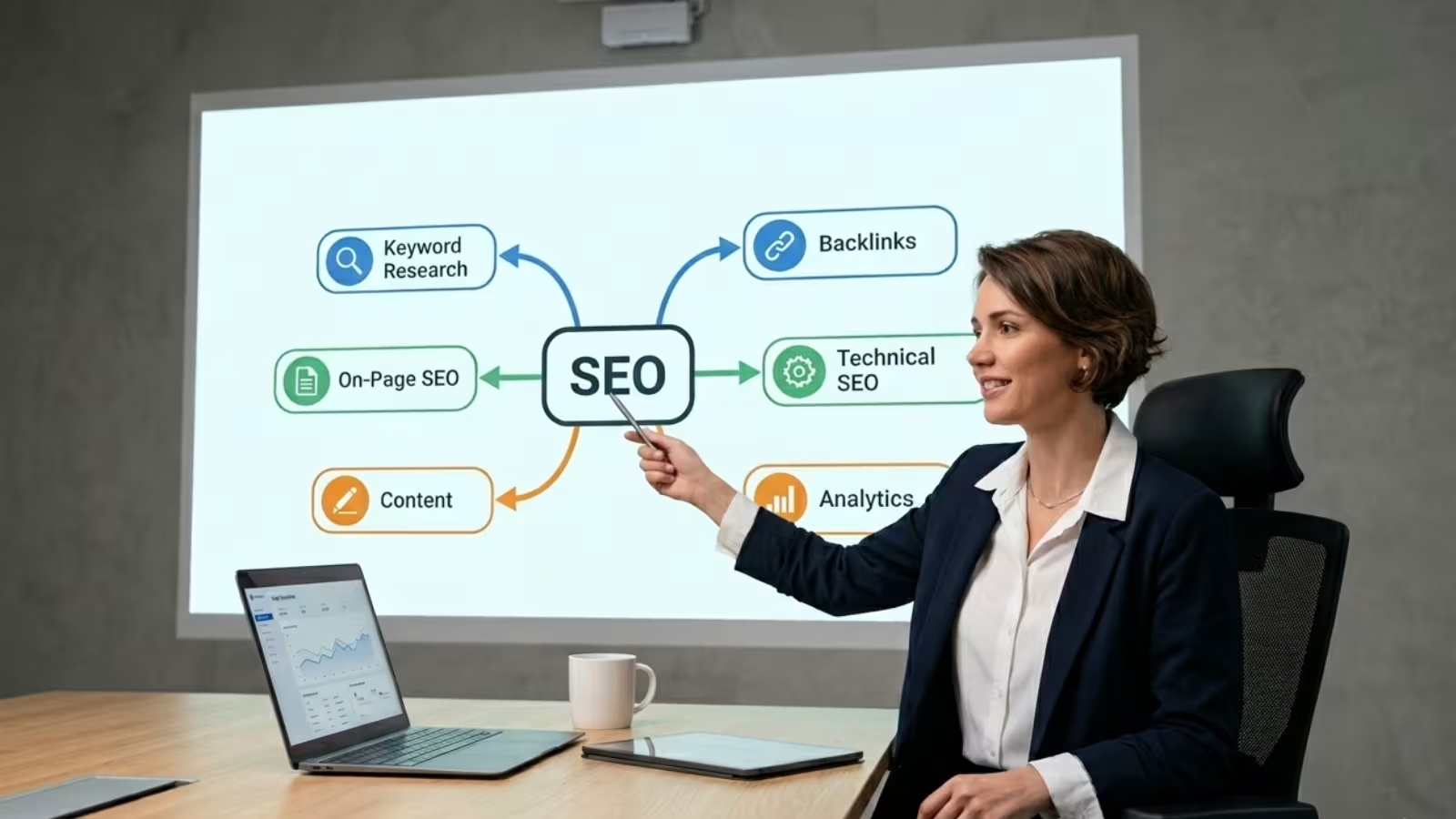
What Is SEO and Why Does It Matter?
- Technical SEO — ensuring search engines can properly read your website.
- On-page SEO — optimizing individual pages with the right content and keywords.
- Off-page SEO — building your website’s authority through external links and reputation.
Keyword Research: The Foundation of Good SEO
How to Find Good Keywords
Use free tools like Google Keyword Planner, Ubersuggest, or Answer The Public. Type your main topic and see what related terms people actually search for. Look for keywords with a decent monthly search volume but manageable competition.
Types of Keywords
- Short-tail keywords — single words or two-word phrases with high volume and high competition. Example: digital marketing.
- Long-tail keywords — specific phrases of four or more words with lower volume but easier ranking. Example: SEO guide for beginners in 2026.
- LSI keywords — related terms that support your main topic. They help search engines understand your content more deeply.
Beginners should focus on long-tail keywords. They are easier to rank for and attract highly targeted visitors who are ready to act.
On-Page SEO: Optimizing Your Content
On-page SEO means optimizing the content and structure of each individual page on your website. This is where this SEO guide for beginners gets very practical.
Title Tags and Meta Descriptions
Every page needs a unique title tag that includes the primary keyword. Keep it under sixty characters. The meta description should be a compelling summary under one hundred and sixty characters. It does not directly affect ranking but strongly influences whether someone clicks your result.
Heading Structure
Use one H1 heading per page. Use H2 headings for major sections and H3 headings for subsections. Include your keyword naturally in at least one H2 heading.
Content Quality and Length
Write content that genuinely helps the reader. Answer the question fully. Aim for at least one thousand words for competitive topics. Use short paragraphs, bullet points, and clear sentences for easy reading.
Image Optimization
Add descriptive alt text to every image. Use compressed file formats to keep page loading times fast. Slow pages rank lower and lose visitors quickly.
Technical SEO Basics for Beginners
Technical SEO ensures that search engines can access, read, and index your website without any problems. You do not need to be a developer to handle the basics.
- Mobile responsiveness — your website must look and function perfectly on smartphones. Google uses mobile-first indexing.
- Page speed — use Google PageSpeed Insights to check your loading times. Compress images, enable browser caching, and use a fast hosting provider.
- SSL certificate — your website URL must start with HTTPS. Sites without SSL are marked as insecure and rank lower.
- Sitemap submission — create an XML sitemap and submit it through Google Search Console. This helps Google discover and index all your pages faster.
- Fix broken links — use a free tool like Screaming Frog to identify and fix any dead links on your website.
Link Building and Off-Page SEO
Search engines view links from other websites as votes of confidence. A page with many high-quality backlinks tends to rank higher than one with few or none. Building these links is called off-page SEO.
Effective Link Building Strategies for Beginners
- Guest posting — write helpful articles for other websites in your niche. Include a link back to your site in the author bio or content.
- Create shareable content — infographics, original research, and comprehensive guides naturally attract links from other sites.
- Internal linking — link between your own articles. This keeps visitors on your site longer and spreads ranking authority across your pages.
- Business directories — list your business on Google Business Profile, Bing Places, and relevant industry directories.
Focus on quality over quantity. One link from a trusted, high-authority website is worth far more than fifty links from low-quality sources.
Measuring SEO Success with Free Tools
You can track your SEO progress with completely free tools. Here are the most important ones every beginner should use:
- Google Search Console — shows which keywords your site ranks for, how many clicks you receive, and any indexing errors that need fixing.
- Google Analytics 4 — tracks total website visitors, where they come from, how long they stay, and which pages they visit most.
- Ubersuggest — tracks keyword rankings and provides competitor analysis in the free version.
- PageSpeed Insights — measures your page loading speed and provides specific recommendations for improvement.
Check these tools at least once a week. SEO results build gradually over months, not overnight. Consistent monitoring helps you spot what is working and fix what is not.
Common SEO Mistakes Beginners Should Avoid
- Keyword stuffing — repeating the same keyword too often makes content feel unnatural and can trigger a Google penalty.
- Ignoring mobile users — more than half of web traffic comes from mobile devices. A poor mobile experience harms both rankings and user satisfaction.
- Copying content — duplicate content confuses search engines and is penalized. Always write original material.
- Neglecting page speed — slow websites lose visitors within three seconds. Page speed is an officially recognized factor in Google’s ranking algorithm.
- Skipping meta descriptions — a compelling meta description significantly increases the click-through rate from search results.
Start Your Data Analytics Career Today
Join WhaleCourseTechnologies for affordable training with hands-on projects and placement support.
Conclusion
SEO is one of the most valuable skills you can develop in 2026. This SEO guide for beginners has covered the full landscape — from keyword research and on-page optimization to technical fixes and link building. The strategies work for any website in any industry.
Start by implementing the on-page basics on your most important pages. Then tackle technical SEO. Build your very first backlinks through guest posts and directory listings. Measure your results monthly and adjust your approach based on real data.
SEO is a long game, but the rewards are exceptional. Free, sustainable website traffic that grows month after month is available to anyone willing to learn and consistently apply these principles.
In This Article
Enroll in Our IT Courses
Master IT Program at whalecoursetechnologies
- Expert Mentorship from IT Professionals
- Job-Ready Skills with Live Projects
- Career Boost Add-on Modules
- 100% Placement & Interview Support