Ways AI Is Transforming Digital Marketing in 2026
The digital landscape is evolving more rapidly than ever before. At the centre of this change is AI in digital marketing. Artificial intelligence helps brands reach the right people at the right time. It removes guesswork and replaces it with smart, data-driven decisions. Whether you run a small online shop or manage a large company, understanding AI is now essential. This guide explains exactly how AI is transforming digital marketing in 2026 and what it means for you.
What Is AI in Digital Marketing?
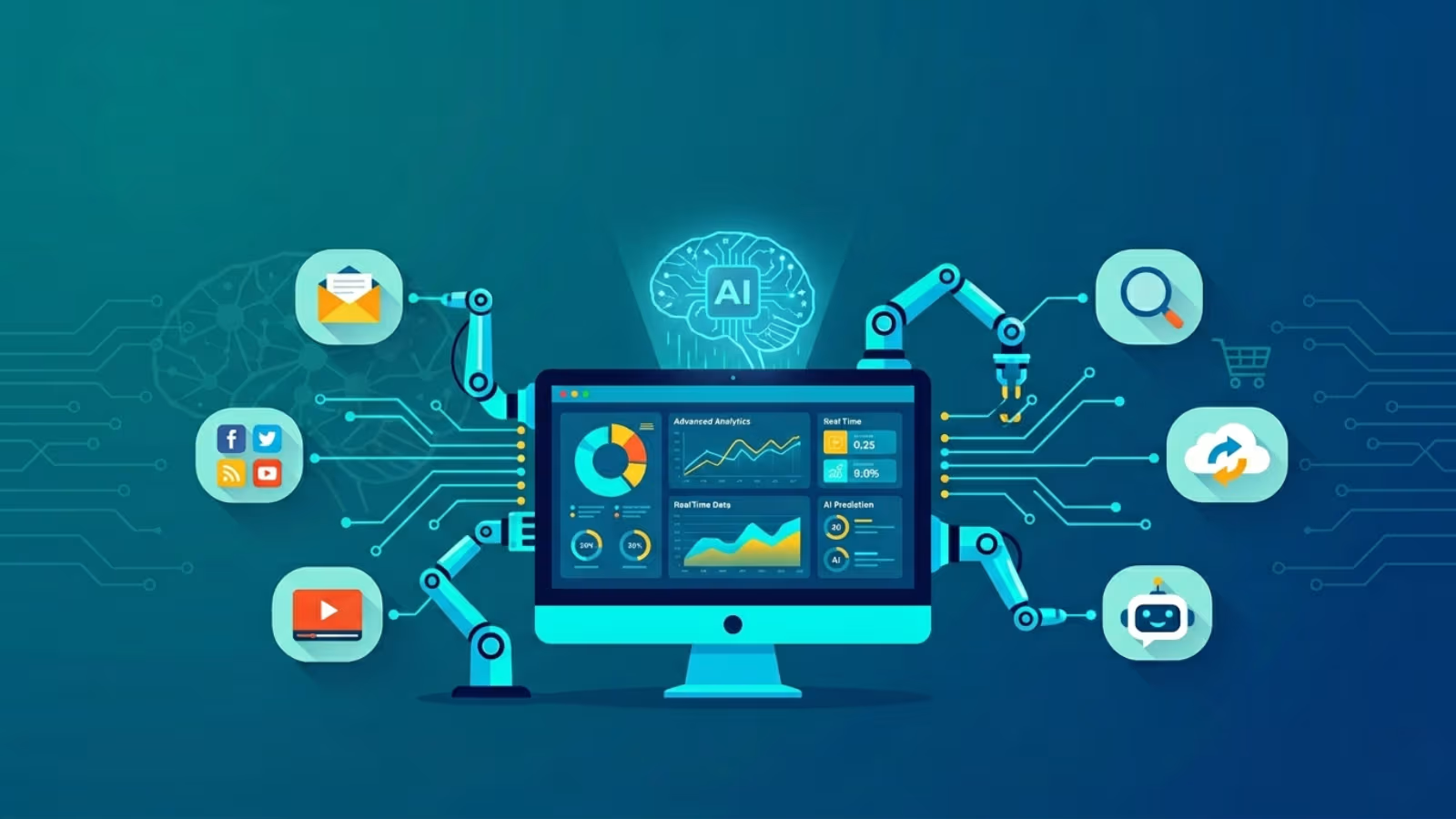
AI in digital marketing means using intelligent software to plan, run, and improve online campaigns. Instead of doing every task by hand, machines process large amounts of data in seconds. They learn from results and keep getting better over time.
Here are the core technologies involved:
- Machine learning — software that finds patterns in data and improves automatically.
- Natural language processing — software that reads, writes, and understands human language.
- Computer vision — software that interprets images and video content.
- Predictive analytics — software that forecasts what customers will do next.
Each of these plays a specific role in modern marketing. Together, they make campaigns smarter, faster, and far more cost-effective.
How AI Is Changing Digital Marketing Strategies
Traditional marketing relied heavily on instinct. Marketers guessed what customers wanted. Today, AI in digital marketing replaces guessing with accurate data. Here are the biggest strategy shifts happening right now.
Hyper-Personalization
Every customer now gets a unique experience. AI reads browsing history, purchase behavior, and search patterns. It uses this information to deliver the most relevant message to each person. Personalized emails alone generate up to six times more revenue than generic ones.
Automated Content Creation
AI writing tools generate blog drafts, social media captions, and ad copy in seconds. Human writers review and polish the output. This saves hours every week without reducing content quality.
Real-Time Campaign Optimization
AI monitors ads every minute of every day. If one version of an ad performs poorly, the system pauses it automatically. If another version wins, the budget shifts to support it. No human needs to check dashboards at midnight.
Top AI Tools Revolutionizing Digital Marketing in 2026
You don’t have to be a technology expert to take advantage of these tools. Here are some of the most useful options you can use today:
- ChatGPT — Draft emails, blog posts, and product descriptions quickly.
- Jasper AI — Generate ad copy in your brand’s specific tone.
- HubSpot AI — Predict the best time to send email campaigns.
- Surfer SEO — Optimize content to rank higher on Google search results.
- Google Performance Max — Automatically run ads across platforms like Search, YouTube, Gmail, and Maps.
- Canva Magic Write — Create visual content with AI text and design suggestions.
Begin with one or two tools that suit your current objectives, and focus on mastering them before incorporating additional tools into your workflow.
Machine Learning for Customer Engagement
Keeping customers engaged is just as important as finding new ones. Machine learning makes engagement much smarter and more personal.
- AI chatbots answer customer questions instantly, any time of day or night.
- Product recommendation engines suggest items based on past purchases, increasing average order value.
- Dynamic emails change their content based on who opens them. A user in Mumbai sees local deals. A user in Delhi sees different offers.
- Smart loyalty programs identify which rewards motivate each customer most and deliver them automatically.
Good engagement builds trust. Trust builds loyalty. Loyalty builds long-term revenue. Machine learning accelerates all three steps.
Predictive Marketing Using AI
Predictive marketing means using AI to forecast what a customer will do before they do it. The system studies past behavior — purchase history, email opens, website visits — and identifies hidden patterns.
Real examples of this in action:
- A fitness app predicts which users are about to cancel and sends them a discount first.
- An e-commerce store predicts when a customer will run out of a product and sends a reorder reminder.
- A bank predicts which customers are ready for a home loan and targets them with relevant content.
The result is better timing, less wasted budget, and stronger customer relationships. This is one of the most powerful ways AI in digital marketing delivers real business value.
AI-Driven Marketing Trends for Small Businesses
AI is no longer restricted to large corporations. Today, small businesses can use the same advanced tools at budget-friendly prices.
Start with Free or Low-Cost Tools
Google Analytics 4 uses AI to automatically highlight important trends. Mailchimp’s free plan suggests the best time to send your emails. Canva’s free version also offers AI-powered design ideas. This means you can begin without needing a big budget.
Automate Repetitive Tasks First
Scheduling social media posts and handling common customer questions are good starting points. AI can manage these tasks with minimal human effort, allowing your team to focus more on creative and strategic work.
Use AI to Understand Your Audience
Data from website visits, email engagement, and social media interactions provides valuable insights. AI analyzes this data to reveal what your audience prefers. You can use these insights to improve your messaging and develop better products.
Challenges of Using AI in Digital Marketing
- Data privacy concerns — AI needs large amounts of user data to work well. Collecting that data must follow privacy laws like GDPR.
- High learning curve — New tools take time to learn. Teams need training before they see results.
- Risk of over-automation — Fully automated content can feel robotic. Human review is still essential to maintain brand personality.
- Accuracy limitations — AI tools sometimes produce incorrect facts. Always verify AI-generated content before publishing.
Start Your Data Analytics Career Today
Join WhaleCourseTechnologies for affordable training with hands-on projects and placement support.
Conclusion
The rise of AI in digital marketing is not something that is coming in the future — it is already here. Brands that use these tools grow faster and spend smarter. Those that ignore them fall behind.
In this guide, you learned how AI is transforming digital marketing in 2026 through personalization, automation, predictive analytics, and smarter advertising. You also discovered how small businesses can start using AI without a large budget.
The key step is to get started. Pick one tool. Learn it well. Measure your results. Then expand from there. The future of marketing belongs to those who move first.
In This Article
Enroll in Our IT Courses
Master IT Program at whalecoursetechnologies
- Expert Mentorship from IT Professionals
- Job-Ready Skills with Live Projects
- Career Boost Add-on Modules
- 100% Placement & Interview Support